Japan guide · Japan regulation
Japan MAH explained: license, three officers, DMAH options
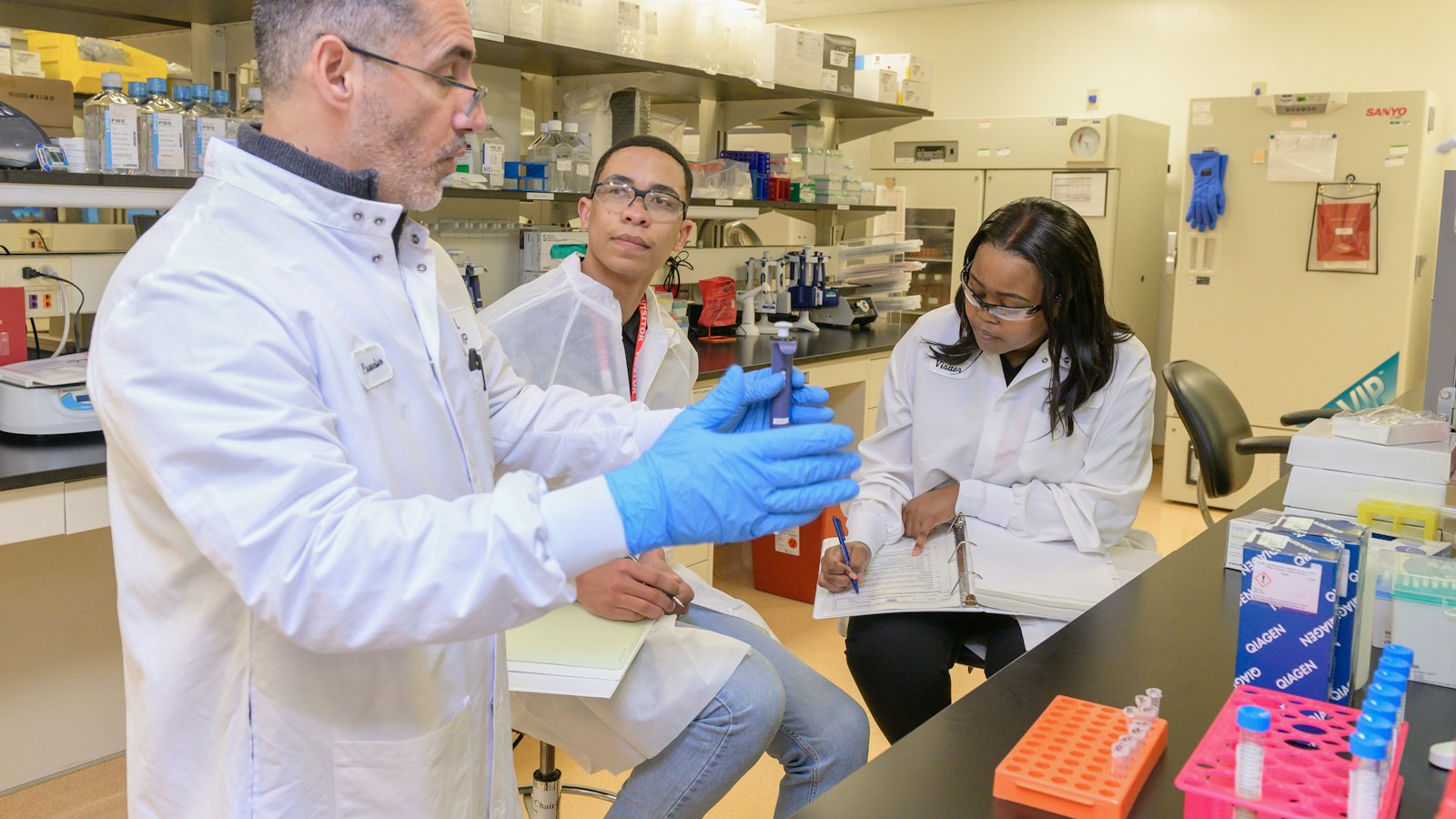
Photo: National Institute of Allergy and Infectious Diseases / Unsplash
Your product is approved in the United States and Europe, and Japan is next. Someone on the board asks the obvious question: who will hold the approval there? A Japanese pharma company has offered a license deal. A consultancy has offered to act as your local holder. Your finance team has priced a Japanese subsidiary. All three proposals use the same three letters, MAH, and mean different things by them.
In Japan the marketing authorization holder (製造販売業者) is a licensed company, not a role on a form. Only a company holding a Japanese MAH license, issued by a prefecture and renewed every five years, can put a drug on the market. The license rests on three named officers and on two ordinances, GQP for quality and GVP for safety. A company abroad cannot hold that license without a base in Japan. What it can hold, through foreign special approval (外国特例承認), is the approval itself, while a designated Japanese MAH does the marketing.
This guide explains what the license involves, what each officer answers for, how responsibility splits with your manufacturing site, how foreign special approval works, and how to choose between a subsidiary, a partner and a designated MAH.
Only a licensed company in Japan can market a drug
Two separate permissions are involved. The marketing approval (製造販売承認) is granted per product by the Minister of Health, Labour and Welfare. The MAH license (製造販売業許可) is granted to the company.
For drugs, prefectural guides describe two license classes. A first-class license is needed to market prescription drugs. A second-class license covers other drugs, with somewhat lighter requirements. Fukuoka Prefecture's guide sums up the conditions: the company must meet the personnel requirement, comply with GQP and comply with GVP, all at once. The license is renewed every 5 years, with an inspection by the prefecture at renewal.
The license comes from a prefecture, not from PMDA. An MHLW notice of 2005 says the governor of the prefecture where the company's main office is located grants it, the main office being where the marketing supervisor-general works. In practice, that ties the license to a real office in Japan with real staff.
MHLW's English presentation on GMP and GQP is blunt about the order of things. A marketing license is a requirement for marketing any drug in Japan, every marketing authorization holder must hold one, and the GQP Ordinance is one of the requirements for licensing the holder.
Decide early which licensed company in Japan will hold the license your product needs, because the product approval alone does not let anyone sell.
Three officers, and what each one answers for
The license names people. Prefectural guides call them the three officers (三役), and they must be appointed before the license is granted.
The marketing supervisor-general (総括製造販売責任者) carries overall responsibility for quality assurance and post-marketing safety, and the GQP and GVP work is organized around this person. For drugs, the law requires a pharmacist in principle. Since August 1, 2021, after the 2019 amendment of the PMD Act, a non-pharmacist may be appointed by exception where appointing a pharmacist is markedly difficult.
The quality assurance manager (品質保証責任者) runs GQP. The GQP Ministerial Ordinance (MHLW Ordinance No. 136 of 2004) requires the holder to have contracts with its manufacturers and to decide on release of each lot to the market. It also covers handling of quality information and defects, recalls, self-inspection and training.
The safety management manager (安全管理責任者) runs GVP under MHLW Ordinance No. 135 of 2004: collecting and evaluating safety information after launch and taking safety measures.
The officers above them are now in view too. Since August 1, 2021, license renewals and change notifications must name the officers responsible for pharmaceutical affairs and state whether disqualification grounds apply. The 2025 amendment of the PMD Act (Act No. 37 of 2025) goes further. According to MHLW's outline, it makes the appointment of the drug quality assurance manager and drug safety management manager a statutory duty. It also lets the government order a change of responsible officers after violations. Law-firm summaries expect these provisions to take effect no later than two years after promulgation, that is by May 2027, with the exact date set by cabinet order.
When you assess any Japanese MAH, ask who the three officers are, how long they have held the role and which other products they cover, before you look at price.
How responsibility splits between the MAH and your site
The MAH answers to the Japanese authorities for the product on the market. Your site answers to the MAH, and to PMDA when it inspects.
Under GQP, the MAH's quality assurance manager decides whether each lot may be released to the Japanese market. That decision rests on your batch documentation and on the contract that GQP requires between the holder and every manufacturer, including foreign ones. Your site still makes its own release decision under the GMP Ministerial Ordinance. Japan has both steps, and the MAH's step comes last.
The MAH also holds the regulatory pen. It applies for the GMP compliance inspection of your site, as the PMDA inspection guide explains. When PMDA inspects on documents only, the foreign manufacturer receives no copy of the result report, so what PMDA concluded about your site reaches you through the MAH or not at all. It files partial change applications and minor change notifications, which the change guide covers. Under Japan's 2021 GMP revision, your site must inform the MAH promptly about quality problems such as stability failures, as the GMP Ordinance comparison describes.
The same holds when something goes wrong in the market. GQP puts recall handling with the MAH, and GVP puts safety information and safety measures there too. Your site supplies the investigation, the batch history and the data, on the MAH's timetable.
None of this works without a contract that says who sends what, by when. The GQP contract is required; its quality is not.
Write the GQP contract around Japanese events (lot release, PMDA questions, change classification, recalls) with named contacts and deadlines in days, not around your global template.
Foreign special approval and the designated MAH
Japan offers one route for a foreign company to keep the approval in its own name. It still needs a licensed company in Japan.
Under foreign special approval (外国特例承認), a foreign manufacturer applies for and receives the approval directly from the Minister. At application it must designate a company in Japan that holds an MAH license for that type of product. The Cabinet Office's Q&A states the consequence: only that designated MAH (選任製造販売業者) may market the imported product.
Because the designated MAH is the company that markets the product, it carries the MAH's duties for it, from GQP market release to GVP safety management. It needs your information to do that, so the contract between you matters as much as under any other route. Since September 1, 2020, change notifications concerning designated MAHs for foreign-made drugs and regenerative medical products go directly to PMDA rather than through a prefecture.
Your manufacturing site still needs Accreditation of Foreign Manufacturers, whatever route holds the approval. The accreditation guide explains it.
If you want the approval in your own name but have no Japanese entity yet, compare designated MAH candidates on their first-class license, their officers and their GVP capacity, since they carry your product's safety duties.
Subsidiary, partner or designated MAH: choosing a route
The three routes put the approval, the people and the margin in different hands. No source ranks them; the choice depends on control, cost and timing.
A Japanese subsidiary with its own license gives full control. It also means hiring a pharmacist as marketing supervisor-general in most cases, staffing quality assurance and safety management, building GQP and GVP procedures, and satisfying the prefecture that they comply before the license is granted.
A partner MAH under a license deal brings an existing license, officers and sales force. The partner holds the approval unless you use foreign special approval with the partner as designated MAH, so your product's regulatory history sits in its files and its priorities.
Foreign special approval keeps the approval with you while a designated MAH runs the Japanese duties. It suits companies that want to own the approval and may build a Japanese entity later. Because the approval stays in your name, a later move to your own subsidiary looks like a change of designated MAH rather than a transfer of the approval. Confirm the procedure with PMDA before you rely on that.
Approvals can move between holders. MHLW's notification form for succession of an approval (承継) records the product, the reason, the date and the previous holder. The receiving company must hold an MAH license, as every MAH must. In a June 2026 notice, Sanofi told hospitals that it would transfer the approval for Benambax for Injection 300 mg to Medical Parkland on August 1, 2026, together with sales, and that product codes would change. A move like that touches labels, codes, contracts and the GQP and GVP files, so plan for it rather than assume it.
Choose the route that fits where you want the approval to sit in five years, and write the exit path, whether succession or a change of designated MAH, into the first contract.
Steps to set up an MAH for Japan
Take these in order. Steps 1 and 2 decide everything that follows.
- Decide where the approval should sit in five years: with a partner, with your own Japanese company, or with your parent company under foreign special approval.
- Confirm the license class your product needs (first-class for prescription drugs) and shortlist companies that hold it, or plan your subsidiary's license application with the prefecture where its main office will be.
- For each candidate, meet the three officers. Check the marketing supervisor-general's pharmacist status, the quality assurance manager's experience with foreign sites, and the safety team's capacity.
- Confirm your manufacturing sites hold Accreditation of Foreign Manufacturers, and agree who will apply for each GMP compliance inspection.
- Draft the GQP contract with Japanese lot release, change classification, PMDA questions and recalls spelled out, with named contacts and deadlines.
- Agree the exit path in writing: approval succession, or a change of designated MAH, with notice periods and who files what.
- Put the license renewal date (every 5 years) and the date the 2025 amendment's officer rules take effect (no later than May 2027, according to law-firm summaries) in your regulatory calendar.
For the Japanese terms you will meet on forms and contracts, see the side box and the glossary.
Sources
- Guide to drug MAH licenses: first-class and second-class, the three officers, GQP and GVP, 5-year renewal (Japanese). Fukuoka Prefecture, Oct 2026.
- Drug MAH license: categories and the responsible officers requirement from August 2021 (Japanese). Hiroshima Prefecture, Oct 2026.
- MHLW notice on the prefecture that grants the MAH license (PFSB notice 0328004, 2005; Japanese). Kyoto Prefecture, Mar 2005.
- Exception allowing a non-pharmacist marketing supervisor-general (2019 amendment; Japanese). Shiga Prefecture, Oct 2026.
- GMP and GQP in Japan: the GQP Ordinance as a licensing requirement for the MA holder (presentation). MHLW, Oct 2026.
- GQP and GVP for drugs (Japanese). Osaka Prefecture, Oct 2026.
- GQP: quality assurance manager and market release (Japanese). Kyoto Prefecture, Oct 2026.
- 2025 amendment of the PMD Act (Act No. 37 of 2025): outline and texts (Japanese). MHLW, Oct 2026.
- Life sciences and healthcare newsletter on the 2025 PMD Act amendment (Japanese). Nishimura & Asahi, Oct 2025.
- Client alert on the 2025 amendment of the PMD Act (Japanese). Baker McKenzie (Tokyo), May 2025.
- Overview Guidance for Foreign Drugs Manufacturers (tentative translation as of Sep. 26, 2023). PMDA, Sep 2023.
- Q&A on foreign special approval and the designated MAH (Japanese). Cabinet Office (OTO), Oct 2026.
- Change notifications for designated MAHs filed directly with PMDA from September 1, 2020 (Japanese). Tokyo Metropolitan Government, Oct 2026.
- Notification of succession of marketing approval (form; Japanese). MHLW, Oct 2026.
- Benambax for Injection 300 mg: succession of marketing approval to Medical Parkland (Japanese). Sanofi K.K., Jun 2026.
English translations published by PMDA and MHLW are tentative; where they differ, the Japanese text prevails.