Japan guide · Japan regulation
Yakkan Shomei: Japan import confirmation for drug samples
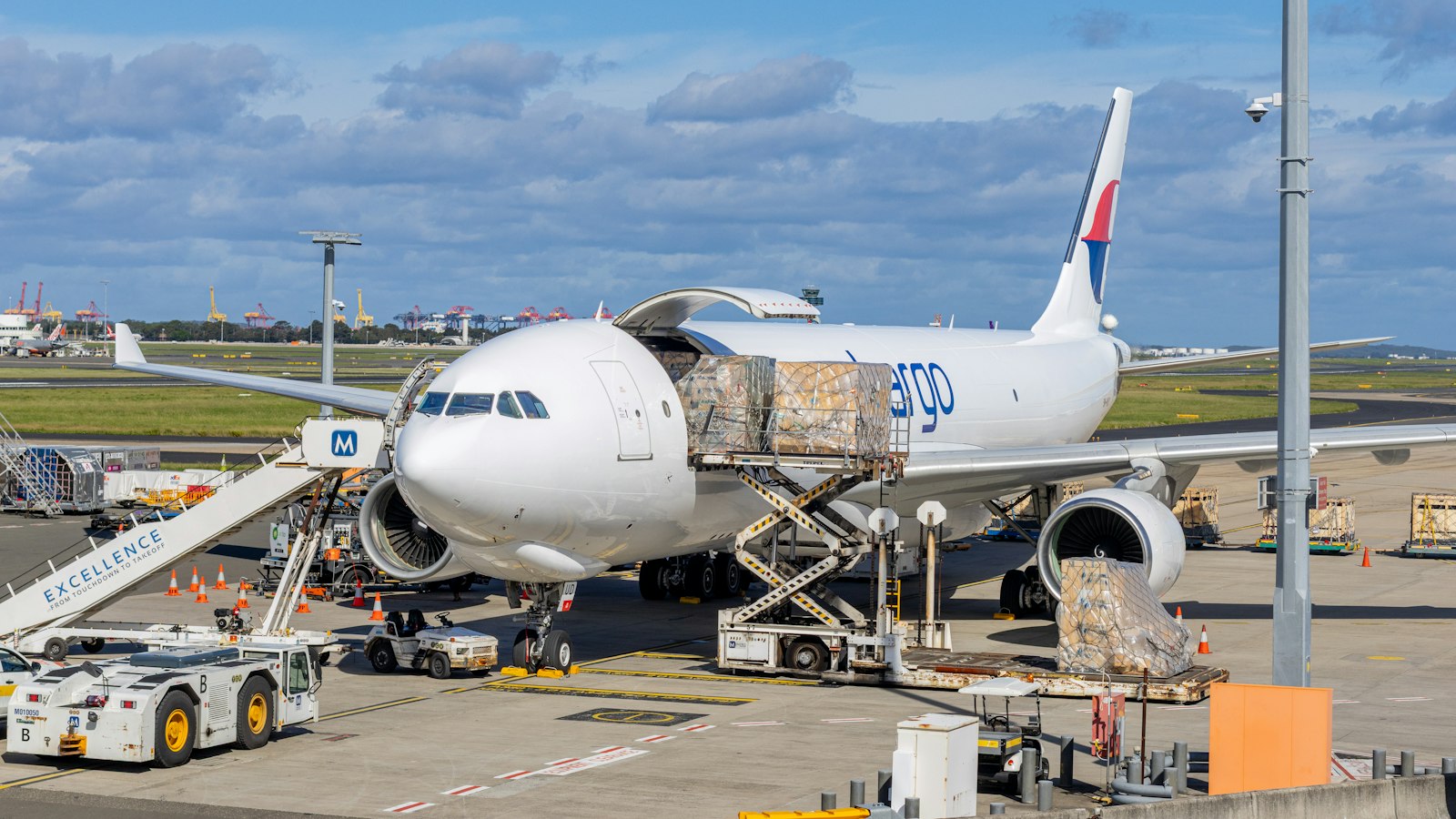
A research partner in Kobe wants a sample of your API for a formulation study. A CDMO in Japan needs reference vials before a technology transfer. You ship, and the parcel stops at customs. Your customer emails asking for a corrected invoice and the air waybill number for their "Yakkan Shomei", a term you may never have heard.
That document no longer exists under that name. Since September 1, 2020, it has been the import confirmation certificate (輸入確認証), issued under Article 56-2 of the PMD Act by a Regional Bureau of Health and Welfare. Your customer applies, not you. But the application is checked against your paperwork: for research and in-house sample imports, the Kanto-Shinetsu bureau wants a copy of your commercial invoice, not a purchase order, and an air waybill that shows the invoice number. A mismatch on your side can hold a shipment that your customer did everything right to clear.
This guide explains which imports need the confirmation, who applies and where, what changed with online filing in 2025, and what a supplier outside Japan should put on the documents that travel with the goods.
What replaced the Yakkan Shomei
The procedure moved into the PMD Act (the Act on Securing Quality, Efficacy and Safety of Products Including Pharmaceuticals and Medical Devices) in 2020. The old name survives in conversation.
MHLW states that imports that used to require a Yakkan Shomei (薬監証明) have gone through the import confirmation procedure since September 1, 2020. The Kanto-Shinetsu Regional Bureau told importers the certificate's name was changing, and allowed the old import report format until August 31, 2021. Tokyo Customs updated its own instructions in the same month. Customs now treats the import confirmation certificate as the document showing that an import complies with the PMD Act. MHLW's operating guideline for the procedure has been revised several times since. The latest revision we found is the notice of June 30, 2025 (Notification 0630-1), issued as government procedures moved toward digital filing.
The certificate is tied to shipments, not to companies. Tokyo Customs' English guidance says customs must confirm the certificate each time such items are imported. A research collaboration that sends material every month will need a confirmation for each consignment.
When a Japanese customer asks for help with a Yakkan Shomei, read it as a request for documents to support an import confirmation application, and ask which shipment it covers.
Which imports need confirmation, and which don't
Import confirmation covers drugs and related products brought in without a sales licence. Commercial imports for sale go through licensed companies and approvals instead.
The application form lists the purposes it serves: company-sponsored clinical trials, physician-led clinical trials, testing and research or in-house samples, exhibition, and personal use. The importer signs a pledge not to sell or pass on the goods beyond the stated purpose. If your customer intends to sell what you ship, import confirmation is the wrong route.
Clinical trial material depends on one filing. The Kanto-Shinetsu bureau's guidance for company-sponsored trials covers imports of trial drugs except where a clinical trial plan notification (治験計画届) has already been filed under Article 80-2, paragraph 2 of the PMD Act. With the notification on file, the sponsor does not apply to the bureau for a certificate. It shows customs a copy of the notification with the receipt stamp, and MHLW's Q&A says it cannot in principle import more than the delivery quantity written there. A shipment that arrives before the notification is filed falls outside the exception, so it needs a certificate. On that route the company files Form 97-3 in two copies with a clinical trial plan (Form 1), an outlook (Form 5) for a bulk import that serves several trials, an import log (Form 6) for split imports, and a copy of the invoice.
Physician-led clinical trials have their own guidance sheet and their own document list. We could not confirm from the sources whether a physician-led trial that has filed a notification follows the same exemption. Have the sponsor confirm which case applies, and ask the bureau if the answer is unclear.
Personal use has published limits. MHLW and Japan Customs allow import without a certificate up to a 1-month supply of prescription drugs, up to a 2-month supply of other drugs and quasi-drugs, and up to 24 units per item of standard-size topical products. Above those quantities, the importer applies to a bureau. This matters for staff who carry medicines on a site visit, not for samples.
Then there is the question your customer may not ask: is the item a drug at all? Reagents, media and analytical materials vary, and some fall under the PMD Act while others do not. For business imports, the Kanto-Shinetsu and Kinki bureaus direct importers to the pharmaceutical affairs division (薬務主管課) of the prefecture where the company is located, and the Kinki bureau asks companies planning imports for sale to consult that division in advance and keep a written record of the answer.
Before a first shipment of any new material, have your Japanese customer confirm in writing, with its prefecture if needed, whether the item is regulated as a drug and under which import purpose it will travel.
Reagents can fall under a second law
A reagent that is not a drug can still need an import confirmation. The bureaus also handle poisonous and deleterious substances.
Japan regulates many laboratory chemicals under the Poisonous and Deleterious Substances Control Act (毒物及び劇物取締法), separately from the PMD Act. The Kanto-Shinetsu bureau's guidance for testing and research imports covers both groups. It asks for a research plan when the goods are unapproved drugs or poisonous or deleterious substances imported for testing, research or in-house samples. It also describes in-house samples of these substances as imports made to judge their commercial value, with no transfer to third parties intended.
The two groups now part ways at the filing stage. When online filing became the rule on July 1, 2025, the Kanto-Shinetsu bureau stated that import confirmations for poisonous and deleterious substances are outside the electronic system. A shipment that mixes a regulated chemical reagent with ordinary materials can therefore leave your customer with two procedures, one online and one not.
This is where equipment and analytical suppliers get caught. A component that is ordinary chemistry to your team can sit in a different legal category for the bureau, and a kit is only as simple to clear as its most regulated part.
Flag every component of a kit or reagent shipment that is classified as poisonous or deleterious in Japan, and ship it separately if that keeps the rest of the order on the online route.
Who applies, where, and how since July 2025
The importer in Japan applies. A third party can apply on the importer's behalf with a power of attorney.
Applications go to one of two bureaus, depending on the customs office that clears the goods. The Kanto-Shinetsu Regional Bureau handles goods entering through the Hakodate, Tokyo and Yokohama customs regions. The Kinki Regional Bureau handles the Nagoya, Osaka, Kobe, Moji, Nagasaki and Okinawa customs regions, as both bureaus' pages say. Older versions of MHLW's import monitoring guideline sent Okinawa clearances to the Okinawa narcotics office of the Kyushu bureau, so treat a document that still shows that routing as out of date. MHLW's English Q&A gives the same split by airport. Narita and Haneda go to Kanto-Shinetsu. Kansai, Chubu Centrair and Naha go to Kinki.
Since July 1, 2025, online filing through MHLW's import confirmation information system is the rule, unless there is a particular reason not to use it. The online route covers three purposes: personal use, treatment by physicians, and testing and research. Imports for company-sponsored clinical trials sit outside it. When an online application has no problems, MHLW emails the certificate as a PDF to the registered address. MHLW also runs an English application page for the system.
The bureau checks the application against the shipment documents. That is where suppliers come in.
Ask your customer which bureau and which purpose its application will use before you prepare documents, because the port and the purpose decide what the bureau expects to see.
What your documents must show
The research and in-house sample route asks for four kinds of document. Two of them come from you.
The Kanto-Shinetsu bureau's guidance lists them. The first is the application itself. The second is a product description, one form per product, giving the name, ingredients, specifications and intended effect. The third is a copy of the commercial invoice. The bureau says a purchase order is not acceptable, and the invoice must be issued by the sender or supplier to the importer, showing what was delivered. The fourth is a copy of the transport document, which is the air waybill for air freight and the bill of lading for sea freight, and the bureau requires that the invoice number be visible on it.
Two more documents apply in specific cases. If the material is an unapproved drug, the importer adds a research plan. If a third party files, a power of attorney is needed. For in-house samples, the bureau's rule is in principle one unit per product, so a box of commercial packs sent as a sample is likely to draw questions. This is the Kanto-Shinetsu bureau's guidance. We did not find a separate list for the Kinki bureau or for the online form, so ask your customer whether either asks for anything different.
The product description is filled in by your customer, but it relies on your data. Ingredients and specifications should match the certificate of analysis and the label in the box. Consistency is what the bureau can check: product name, quantity and invoice number should agree across the invoice, the waybill, the product description and the label.
Issue the invoice to the importer named on the application, print the invoice number on the air waybill, and use the same product name and quantity on every document in the shipment.
Steps for suppliers shipping samples to Japan
Work through these before you book the courier. Steps 1 and 2 settle which rules apply.
- Ask the customer who the importer of record is, which bureau will handle the application (by port of entry), and which purpose applies: testing and research, in-house sample, clinical trial or exhibition.
- Confirm with the customer whether the item is regulated as a drug under the PMD Act, and whether any component is a poisonous or deleterious substance. If drug status is unclear, the customer should ask its prefecture's pharmaceutical affairs division and keep the answer in writing.
- For trial materials, ask the sponsor whether a clinical trial plan notification has been filed and who imports the drug, because the bureau's guidance treats those cases differently.
- Send the customer, before shipping, the product name, ingredients, specifications and intended use it needs for the product description form, using the same wording as your certificate of analysis.
- Prepare a commercial invoice addressed to the importer, not a purchase order, listing exactly what is in the box. For in-house samples, plan on one unit per product.
- Make sure the invoice number appears on the air waybill, and that product names and quantities match across invoice, waybill, label and certificate of analysis.
- Treat each consignment as a new application. Agree a lead time with the customer that leaves room for the bureau's review before the goods arrive.
If the samples are the start of a commercial supply relationship, the regulatory picture changes. A site that manufactures for the Japanese market needs accreditation as a foreign manufacturer, and an API or excipient supplier may need a Japanese Master File. Japanese terms from customs and bureau forms are in the glossary.
Sources
- Number of import confirmation certificates issued (FY2021), with note on the 2020 change (Japanese). MHLW, Oct 2026.
- Notice: Yakkan Shomei renamed import confirmation certificate from September 1, 2020 (Japanese). Kanto-Shinetsu Regional Bureau of Health and Welfare, Sep 2020.
- Customs notice on import confirmation certificates as other-law documents (Japanese). Tokyo Customs, Sep 2020.
- The Law on Pharmaceuticals and Medical Devices (customs procedures). Tokyo Customs, Oct 2026.
- Online applications through the import confirmation system from July 1, 2025 (Japanese). Kanto-Shinetsu Regional Bureau of Health and Welfare, Jul 2025.
- Revision of the import confirmation operating guideline (Notification 0630-1, June 30, 2025), with old-new comparison (Japanese). MHLW (posted by Kinki Regional Bureau of Health and Welfare), Jun 2025.
- Import confirmation information system (Japanese). MHLW, Oct 2026.
- Application for Import Confirmation. MHLW, Oct 2026.
- Q&A on bringing medicines into Japan. MHLW, Oct 2026.
- Import procedures for drugs and related products (Japanese). Kinki Regional Bureau of Health and Welfare, Oct 2026.
- Import confirmation application form with purpose categories (Japanese). Kinki Regional Bureau of Health and Welfare, Oct 2026.
- Importing drugs and related products for testing and research (Japanese). Kanto-Shinetsu Regional Bureau of Health and Welfare, Oct 2026.
- Importing drugs for company-sponsored clinical trials (Japanese). Kanto-Shinetsu Regional Bureau of Health and Welfare, Oct 2026.
- Importing for clinical trials led by a physician or dentist (Japanese). Kanto-Shinetsu Regional Bureau of Health and Welfare, Oct 2026.
- Importing in-house samples (Japanese). Kanto-Shinetsu Regional Bureau of Health and Welfare, Oct 2026.
- Q&A on import procedures for drugs and related products (administrative notice of June 30, 2025) (Japanese). MHLW (posted by Kanto-Shinetsu Regional Bureau of Health and Welfare), Jun 2025.
- Personal import of medicines: quantities (Japanese). MHLW, Oct 2026.
- Poisonous and Deleterious Substances Control Act (Act No. 303 of 1950). Japanese Law Translation (Ministry of Justice), Feb 2019.
English translations published by PMDA and MHLW are tentative; where they differ, the Japanese text prevails.