News · Monoclonal antibodies
LEQEMBI Pen launches in Japan: a weekly 500 mg dose in two pens
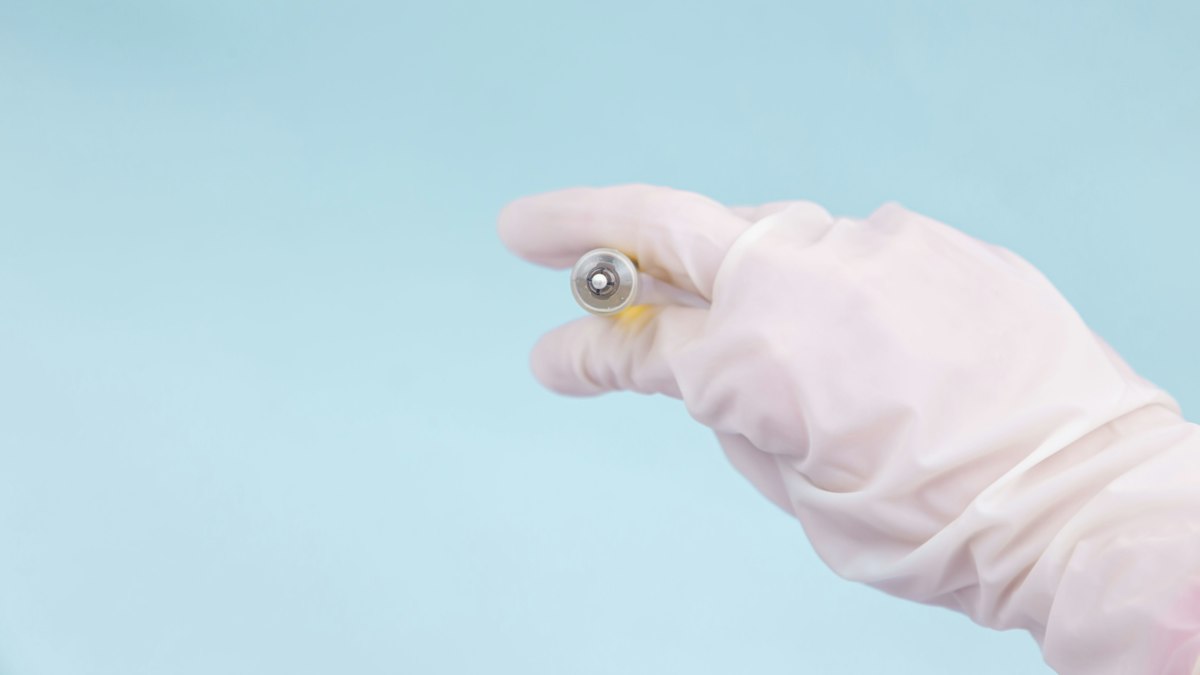
Photo: Diana Polekhina / Unsplash
Eisai and Biogen launched LEQEMBI Pen, the subcutaneous (SC) formulation of their anti-amyloid beta protofibril antibody LEQEMBI (generic name: lecanemab), in Japan on November 13, 2026. The pen was approved in Japan on September 16, 2026 as a drug with a new route of administration. Japan is the second country to launch the SC formulation, after the United States, and the two companies position it as the first anti-amyloid treatment in Japan that can be given at home.
One weekly dose is two 250 mg pens, about 15 seconds each
The usual dose is 500 mg of lecanemab injected subcutaneously once weekly, delivered by an autoinjector the patient or a care partner can use. A dose is two pens of 250 mg. The packaging is given as LEQEMBI Pen 1.25 mL x 2 pens, and Eisai and Biogen put the injection time at about 15 seconds per pen.
Until now, treatment meant an intravenous (IV) infusion every two weeks at a medical facility, and once-weekly SC administration now sits alongside it. A subcutaneous dose has to arrive in far less liquid than an infusion. Viscosity and needle bore set how fast the pen can empty, as they do for the prefilled syringe that replaced Shingrix vials in Japan.
The initiation regimen matches the US; the approval history does not
In the US, SC maintenance dosing (360 mg) with LEQEMBI IQLIK was approved in August 2025, and SC initiation treatment (500 mg) was approved in July 2026, followed by China in September 2026. Japan took a different path to the same place. It was approved as a drug with a new route of administration on September 16, 2026, carrying one dosage, 500 mg once weekly.
A dose split across two pens adds a step for assembly and labeling to carry. The pack has to make clear that the two pens are one dose, and the handling around it has to keep them from being taken for two doses.
Approval rests on exposure similarity, and the 1.4% figure comes from another presentation
The approval is based on the integrated results of data, modeling and simulation from the 18-month core study of the Phase 3 Clarity AD study and from multiple SC administration sub-studies in the long-term extension study (LTE). In those sub-studies, once-weekly SC 500 mg showed exposure similar to IV administration every two weeks.
The overall safety profile of SC administration was generally similar to that of IV administration, the companies say, while systemic injection and infusion-related reactions were seen less frequently with SC (1.4%) than with IV. A footnote qualifies that number. It is the incidence in participants newly started on lecanemab by SC administration, and it comes from clinical data on once-weekly SC lecanemab 720 mg using vial formulations, a different presentation from the pen.
What to check as administration moves out of the clinic
When treatment starts, it must be given at a medical facility by a physician, or under the direct supervision of a physician. Self-administration follows only after its appropriateness has been carefully considered and thorough education and training provided. It also takes confirmation that the patient or family member or caregiver understands the risks and how to respond to them and can reliably administer the drug. It then runs under the management and guidance of a physician. Monitoring for ARIA (amyloid-related imaging abnormalities) is the same as for IV administration: brain MRI before treatment starts and at specified time points after initiation.
On the manufacturing and quality side, the premise changes, because the product is now kept and carried at home or while traveling. That puts the weight on the temperature range the stability program covers and the in-use conditions. It also puts it on particles and aggregation at the silicone oil interface, including particle counts after the agitation that stands in for transport. The last question is whether container closure integrity holds to the end of shelf life. The weekly 500 mg initiation regimen reached the US first; in Japan the same dosage arrived through an approval for a new route of administration.
Sources
- LEQEMBI Pen (Subcutaneous Formulation of LEQEMBI) Now Available in Japan for Patients with Early Alzheimer's Disease. Eisai Co., Ltd., Nov 2026.
- LEQEMBI Pen, the subcutaneous formulation of LEQEMBI, launched in Japan as a treatment for early Alzheimer's disease (Japanese release). Eisai Co., Ltd., Nov 2026.