News · Organoids
Mitsui Chemicals launches InnoCell P-Type plate for adherent cells
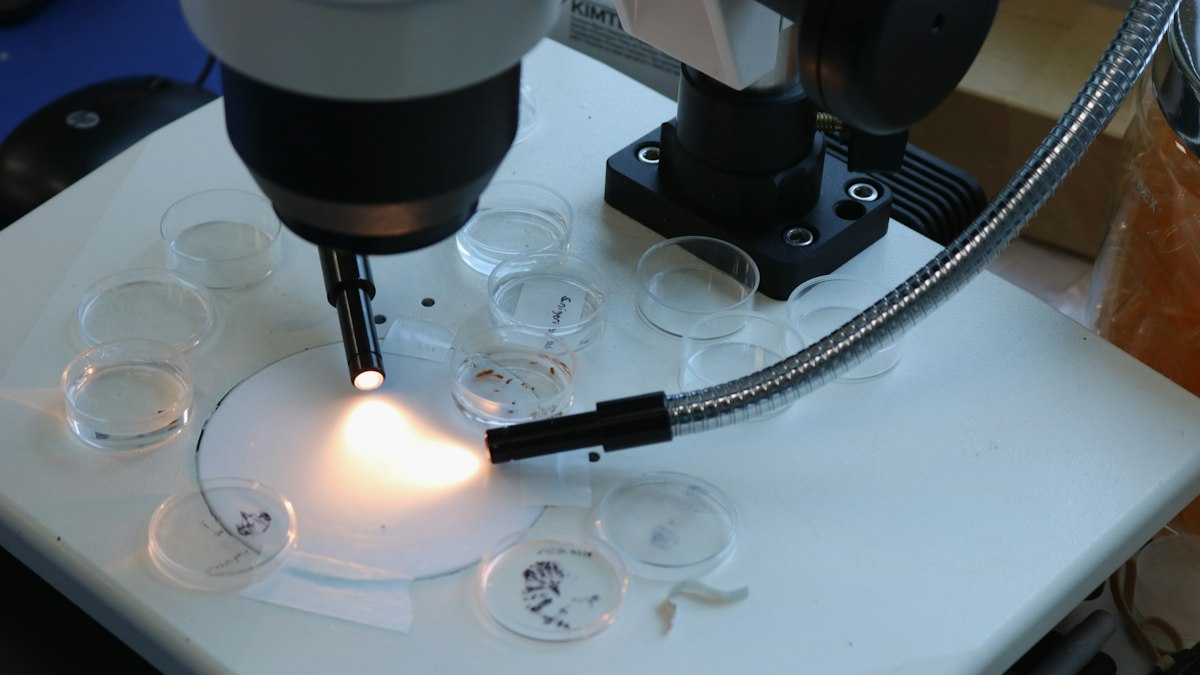
Photo: National Institute of Allergy and Infectious Diseases / Unsplash
Mitsui Chemicals launched InnoCell P-Type, a culture plate for adherent cells, on October 1, 2026, and announced it on October 5. It is the newest product in the company's InnoCell line. The plate combines Mitsui Chemicals' own oxygen-permeable material with a surface treatment that helps cells attach. The target is organoids (small organ-like tissues grown from stem cells and other cells) and tissue models used to test drug efficacy and toxicity. The price has not been disclosed.
Most culture plates are made of polystyrene, which lets little oxygen through. Cells get their oxygen almost entirely from what dissolves at the surface of the medium above them and diffuses down. That is enough for a flat layer of cells. In a thick organoid the interior runs short, and tissues grown under the same conditions come out differently. Mitsui Chemicals says this oxygen shortage can hurt tissue uniformity and the reproducibility of 3D culture data.
InnoCell supplies oxygen through the vessel itself. In 2022 the company said it had established mass production technology for the line, using TPX (polymethylpentene) and delivering about 200 times as much oxygen to cells as conventional plates. In June 2025 it announced an N-type for non-adherent cells and spheroids and a collagen-coated C-type for hepatocytes. The P-Type extends the line to cells that grow attached. Mitsui Chemicals also cites low autofluorescence, which matters for imaging, and low adsorption of test compounds to the plate.
Two evaluations were released with the launch. Professor Hidetoshi Masumoto of Kansai Medical University grew cardiac organoids from human iPS cells on the P-Type and compared them with organoids grown on polystyrene. He reported tissue that was more uniform in thickness and thicker overall. Associate Professor Jonny Sexton of the University of Michigan grew epithelial cells derived from human intestinal organoids and measured barrier function, which relates to drug absorption and the gut's defenses. The results suggest that this assay, normally run on porous membrane inserts, could be run without inserts, with high sensitivity and low variability. Both results come from the company's announcement.
Drug developers are turning to organoids as alternatives to animal testing, and the US FDA said in 2025 that it plans to reduce preclinical animal testing for antibody drugs. That puts pressure on getting the same tissue every time. For a lab building such an assay, the plate is a variable on the same level as the medium and the cell line. Switching plates partway through a program means repeating the comparisons.
Sources
- Mitsui Chemicals news release on the launch of InnoCell P-Type. Mitsui Chemicals, Oct 2026.
- Mitsui Chemicals Establishes Technology for Commercial Production of InnoCell Oxygen-Permeable Cell Culture Vessels. Mitsui Chemicals, Jul 2022.
- Mitsui Chemicals Launches Highly Oxygen-Permeable InnoCell Cell Culture Microplates. Mitsui Chemicals, Jun 2025.
Also published in Japanese: 三井化学、酸素を通す接着培養プレート「InnoCell Pタイプ」発売