Japan guide · Quality control · Sterility
Sterility testing and RMM: what a negative result proves
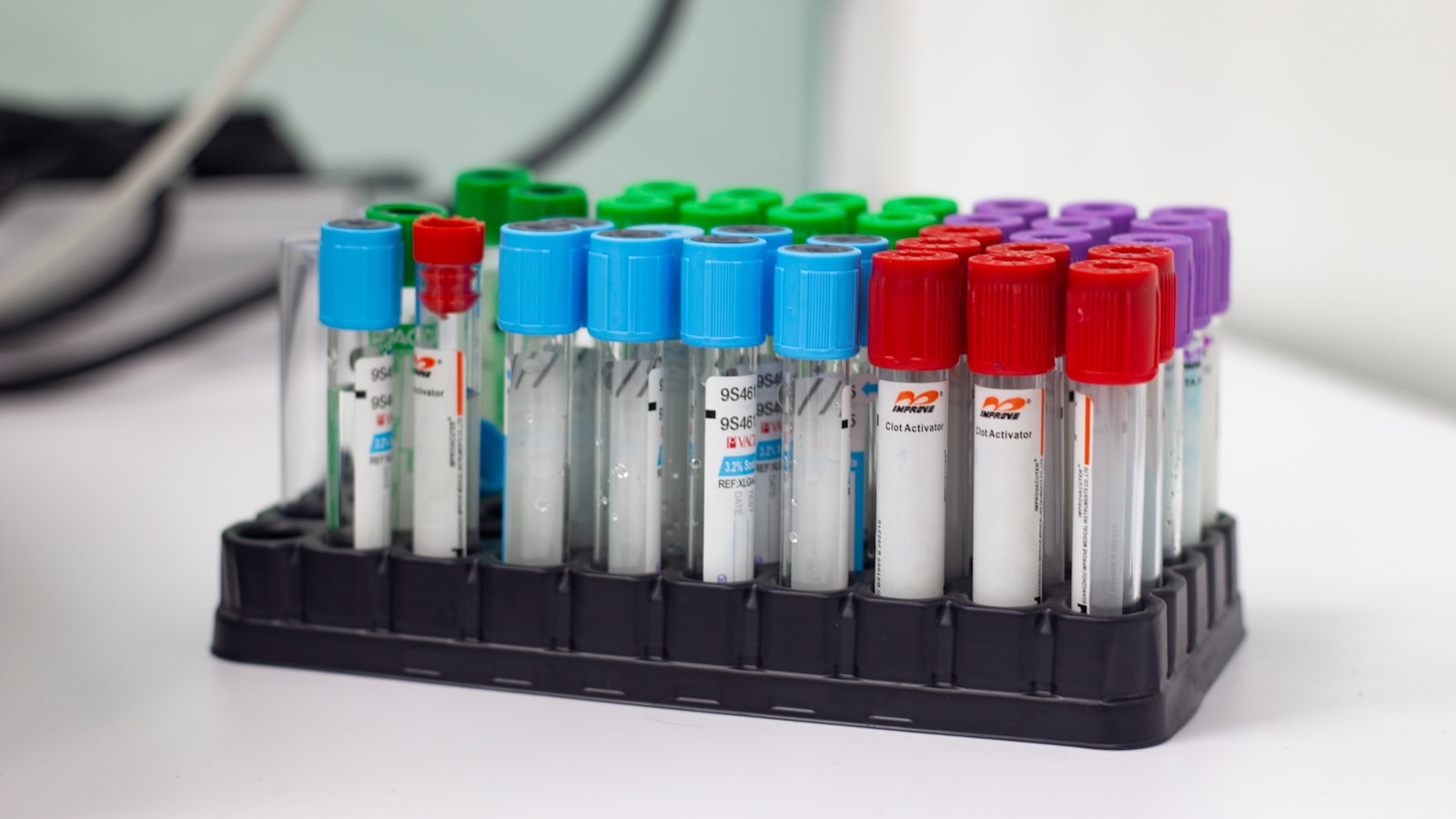
Photo: Mezidi Zineb / Unsplash
Your sterility test came back negative and the lot is waiting for release. Can you say it is sterile? You can't. If 1 unit in 1,000 is contaminated and you test 20 units, the chance of a positive is about 2%. The other 98% of the time, a contaminated lot reads negative.
The test does not prove that a lot is sterile. It is the last gate that checks whether the process built to make sterility actually worked. Its second limit is time. Incubation takes 14 days, and an autologous cell therapy with a shelf life of days cannot wait for the result. That is why rapid microbiological methods (RMM) are coming into use.
QC runs the test, but QA reviews any change of method, purchasing chooses the instruments and contract labs, and manufacturing decides how much product can be spared for testing. Sales teams hear the question from customers too. This guide sets out what a negative can and cannot tell each of them, what to do when a positive appears, how the three families of RMM differ, and what you must show before a rapid method can release product.
What does a negative sterility test actually tell you?
Very little. A positive says a lot, and a negative says almost nothing.
The compendial test (USP <71>, Ph. Eur. 2.6.1 and the Japanese Pharmacopoeia general test 4.06, 無菌試験法) puts the contents of sampled containers into two culture media, incubates them for 14 days, and checks that nothing grows. A product that can be filtered goes through a membrane that collects any organisms, and the membrane is rinsed to wash the drug away before it goes into media (membrane filtration). A product that cannot be filtered goes into the media as it is (direct inoculation). To keep the operator from contaminating the test, filtration is usually done in closed-system devices such as Merck's Steritest or Sartorius's Sterisart.
Before the test, you also confirm that organisms can grow in your product. You add a small number of organisms and see whether they multiply, which shows whether the product's antimicrobial action is interfering. Skip that check and a negative cannot tell you whether the cause is "nothing there" or "nothing could grow".
The sample is small. For a lot of tens of thousands of units, it is about 20 units (USP <71>). The 2% above is the chance that 20 units catch a contamination rate of 1 in 1,000. Even at 1% contamination, the chance of catching it stays under 20%.
So a lot that passes is sterile not because it passed. It is sterile because the process made it so: sterilizing filtration, an aseptic environment and few human interventions. The article on sterility assurance level (SAL) (in Japanese) takes the same view.
A negative sterility test is a record that the process was working at the end, not proof that the lot is sterile.
Can you blame a positive on the lab?
Only with decisive evidence. Because a negative says so little, a positive carries weight, and the common mistake is to wave it away as laboratory contamination.
On April 13, 2026, FDA issued warning letter 320-26-62 to the UCSF (University of California, San Francisco) radiopharmaceutical manufacturing facility. The facility had a failed sterility test in which a Bacillus species was found. It concluded that it found no deficiency in the laboratory, but that the organism probably got in during the test. FDA did not accept the explanation, saying there was still no decisive evidence that laboratory contamination was the cause.
A second argument concerns the media. A sterility test uses two media, and there has been a view that a positive can be treated as a false positive because the other medium showed no growth. FDA does not agree with that treatment either, since media differ in sensitivity and in the organisms they support.
Putting a positive down to the laboratory takes an investigation that also shows no manufacturing cause is left.
To call a positive a laboratory contamination you need decisive evidence, and without it you investigate the manufacturing side.
What can you use when 14 days is too long? Three families of RMM
For a product with a long shelf life, such as an antibody, 14 days of culture fits into the release schedule. An autologous cell therapy made from a patient's own cells is different. Its shelf life after manufacture runs from hours to days, and 14 days would make the product unusable. In practice, the decision to administer rests on in-process sterility tests and Gram stain results, and the 14-day result is confirmed afterward (see release testing for cell therapy).
RMM falls into three families, by what each lets you stop waiting for.
The first family detects growth early, through automated culture. A machine picks up signs of growth before turbidity is visible to the eye. What to check is the detection time for slow-growing yeasts and molds. The standard example is bioMérieux's BacT/ALERT, which reads changes inside the culture bottle continuously. In a validation on a mesenchymal stem cell product, bacteria turned positive within 36 hours and the mold-type Aspergillus within 72 hours.
The second family detects micro-colonies, using imaging or similar means to find them before they grow large enough to see. What to check is the background effect in samples that contain cells. Examples are Merck's Milliflex Rapid and Rapid Micro Biosystems' Growth Direct. For the latter, the maker's announcement says final results can come in as little as 1 to 3 days.
The third family measures without growth. It skips culture altogether and checks directly, by ATP luminescence or nucleic acid amplification. What to check is the possibility of counting dead organisms, and inhibitors in the sample. Charles River's Celsis is an ATP luminescence system. Fujifilm Wako (a Japanese reagent maker) launched RiboNAT in 2025, a nucleic acid amplification kit that is reported to judge in about 7 hours. This is the fastest family, and the price is that a positive is hard to attribute to live organisms or to remnants of dead ones.
The reason for introducing RMM differs by product. In cell therapy, the motive is to get the answer in time for administration. For conventional dosage forms, it is to cut inventory. A different motive means a different amount of time you must save and a different loss of sensitivity you can tolerate. Unless you decide first what the speed-up is for, the requirements for adoption cannot be set.
Speed and ease of mapping back to the compendial method run roughly opposite, and choosing a method is choosing where to settle between them.
What must you show before a rapid method can release product?
That it is equivalent to the compendial method. Buying an instrument is the quick part, and this is what takes the time.
The framework is USP <1223>, Ph. Eur. 5.1.6 and the JP's general information chapter on rapid microbiological methods (迅速微生物試験法). It asks you to show that the method identifies the target organisms correctly, what the lowest detectable number of organisms is, that results hold when conditions shift a little, and how it compares with the compendial method. The lowest detectable number matters most: you show that it is the same as or lower than the compendial method, across several species. For cell-derived products, Ph. Eur. 2.6.27 and USP <1071> set out how to think when the sterility test cannot be used as it stands.
The choice of organisms makes a difference. Beyond the compendial reference strains, you are expected to include organisms actually found in your own environmental monitoring. Each site's isolates differ, so this part you have to build yourself.
Three points sharpen the selection.
First, the maker's performance data and the result on your own sample are different things. A sample containing cells, a cryoprotectant or antimicrobial ingredients changes the background signal and the inhibition. Second, check the slow organisms. Look at how many hours the slowest yeast or mold takes to show up, not at the average speed. Third, decide the procedure for after a positive. A nucleic acid amplification positive does not distinguish live from dead, so settle in advance whether you follow it with culture, whether you retest, and how the lot is handled.
A common failure is to install the instrument and only then start looking for organisms to validate with. Assembling the comparison data takes far longer than selecting the instrument, so start-up slips badly.
The heavy work of adopting RMM is not selecting the instrument but assembling data that shows equivalence to the compendial method.
Checks you can run tomorrow
Look at your own sterility test, or at a rapid method you are considering, and ask the following.
- When a positive appears, does the procedure say what to investigate before anyone blames the laboratory?
- Have you ever set the product's shelf life next to the day the sterility result arrives?
- If you are considering a rapid method, can you state its purpose (making it in time, or cutting inventory) and the amount of time you need to save, in numbers?
- Was the maker's performance data taken on samples close to yours, with cells and cryoprotectant?
- Do the organisms for validation include those found in your own environmental monitoring?
Closed-system devices, media and rapid systems can be compared in the sterility test directory. Mycoplasma testing is set separately from sterility testing and is covered in mycoplasma testing. Controls on the side that keeps product sterile are in sterile filtration (in Japanese) and environmental monitoring and media fill (in Japanese).
Sources
- Warning Letter 320-26-62, UCSF Radiopharmaceutical Facility (April 13, 2026). U.S. Food and Drug Administration, Apr 2026.
- NEW in 2024! Growth Direct Rapid Sterility Detection in as Little as 12 Hours. Rapid Micro Biosystems (via rapidmicrobiology.com), 2024.
- USP General Chapters <71> Sterility Tests, <1071> Rapid Microbial Tests for Release of Sterile Short-Life Products and <1223> Validation of Alternative Microbiological Methods (paid text in USP-NF). United States Pharmacopeia (USP), Oct 2026.
- European Pharmacopoeia 2.6.1 Sterility, 2.6.27 Microbiological examination of cell-based preparations and 5.1.6 Alternative methods for control of microbiological quality (paid text). EDQM, Oct 2026.
- Japanese Pharmacopoeia general tests, including 4.06 Sterility Test (Japanese). PMDA, Oct 2026.
- ICH Q2(R2) Validation of Analytical Procedures. ICH, Nov 2023.
- ICH Q14 Analytical Procedure Development. ICH, Nov 2023.