Japan guide · Quality control · Bioburden
Bioburden monitoring: test methods and pre-filtration limits
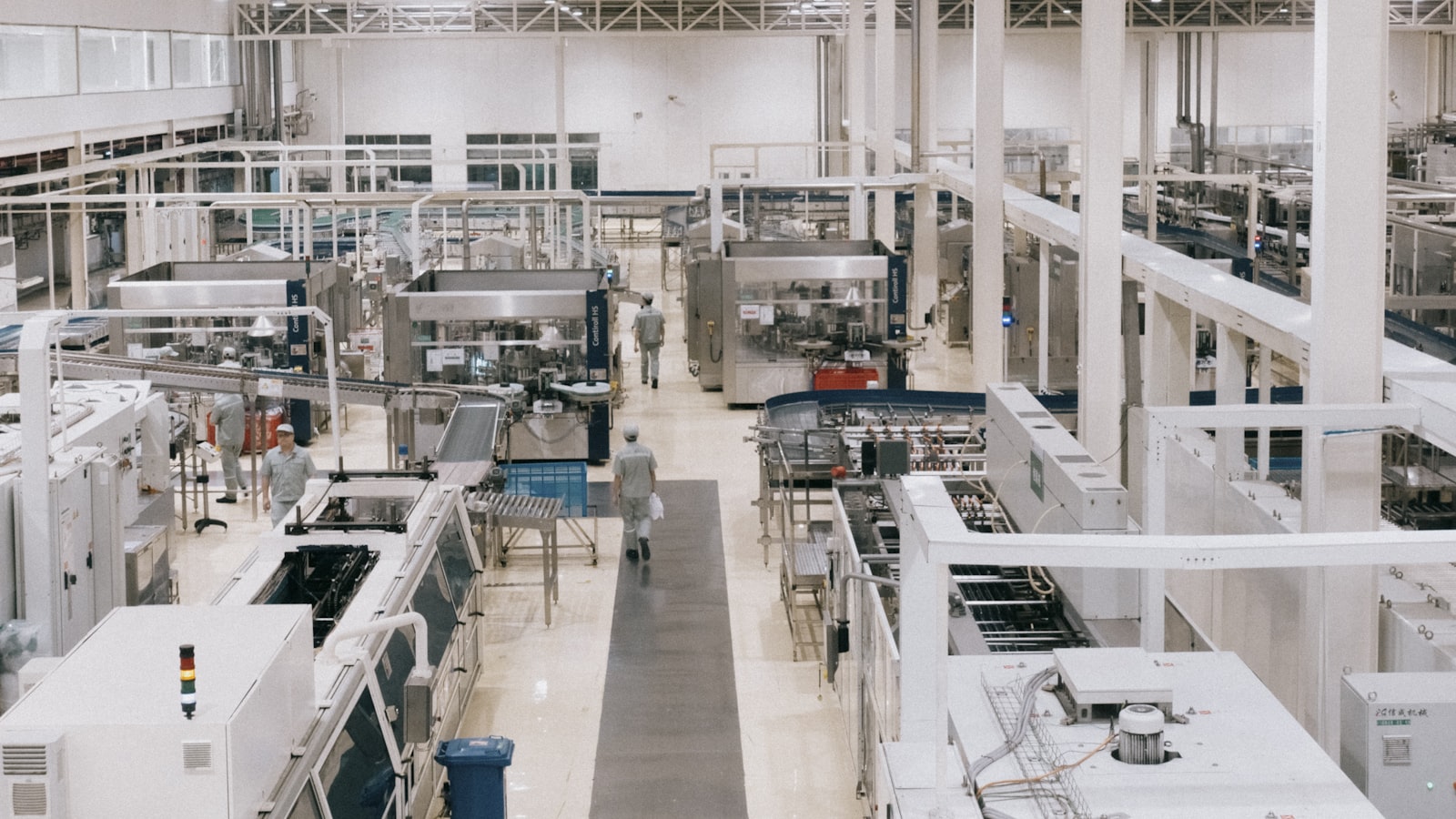
Photo: Catgirlmutant / Unsplash
A pre-filtration sample comes back with "no growth", and the lot moves on to the sterilizing filter. What does that zero actually support?
Bioburden is the number of living microorganisms in a process fluid or product before sterilization or sterile filtration. It is counted in CFU (colony-forming units) and usually expressed per 100 mL. Sterilization steps are designed on the assumption that few organisms arrive at them. If that assumption fails, sterility assurance wavers, and the endotoxin the organisms leave behind is not removed even by sterile filtration. That is why EU GMP Annex 1 asks, in principle, for the bioburden of a sterile product to be tested before sterilization on every lot.
This guide covers what bioburden counts and what it leaves out, how the limit chooses the test method, how to show that a zero is real, where the 10 CFU/100 mL limit comes from and when it applies, and how to set alert and action levels. It ends with the order for building the whole program.
What does bioburden count, and what does it leave out?
It counts colonies that grow on a medium. The way it counts is also its limit.
One colony does not always come from one organism. A clump of several organisms is still one colony, which is why the unit is CFU and not "number". Dead organisms do not grow, so they are not counted. Organisms that are alive but do not grow on that medium at that temperature drop out too.
That is where bioburden and endotoxin part ways. Gram-negative bacteria leave endotoxin, a cell wall component, in the liquid even after they die. A 0.2 µm sterilizing filter holds organisms back but lets endotoxin through. Low bioburden therefore also narrows the source of pyrogens at the root. The division of labor between the two tests is covered in bioburden versus endotoxin (in Japanese).
The sterility test plays a different role. It incubates samples from the final product for 14 days and looks only at whether anything grows. Because it is sampling, its power to prove the sterility of a whole lot is limited. Methods that do not wait for culture are appearing: Fujifilm Wako, a Japanese reagent maker, sells a nucleic acid amplification sterility test kit (RiboNAT) that judges in about 7 hours. Even so, only bioburden tells you, as a number, the state of the process fluid right before sterilization.
Bioburden is less a pass/fail test than a count that mirrors the load put on sterilization or sterile filtration and the state of the process.
Which test method fits? Let the limit choose
The basis for how to count is the microbial enumeration test for nonsterile products. The microbial limits tests of the USP (<61>), European and Japanese pharmacopeias are harmonized across the three regions.
There are four methods, and one criterion matters when you choose. The Japanese Pharmacopoeia (JP; 19th revision in force since April 10, 2026, general test 4.05 Microbial Enumeration Tests, 微生物限度試験法) asks you to choose a method that can test a sample amount large enough to judge conformity with the specification.
Membrane filtration filters the sample and places a membrane with a pore size of 0.45 µm or less on agar. It takes a large volume, so it suits aqueous process fluids with few organisms, but not viscous or particle-laden samples that cannot be filtered. The pour plate method mixes the sample with melted agar and lets it set. It works for samples with many organisms or samples that are hard to filter, but one plate takes only a small volume. Spreading the sample over set agar (the surface spread method) takes even less. The most probable number (MPN) method counts growth in a dilution series of liquid media. It is a means for samples where the other methods cannot be used, and it is less precise.
Total aerobic microbial count (TAMC) is incubated on soybean-casein digest agar at 30 to 35°C for 3 to 5 days. Total yeast and mold count (TYMC) is incubated on Sabouraud dextrose agar at 20 to 25°C for 5 to 7 days. A result takes at least 3 days.
The effect of volume is easiest to see if you take 10 CFU/100 mL as the limit you want to judge. Filter 100 mL by membrane filtration, and one colony equals 1 CFU/100 mL, so you can see down to a tenth of the limit. Filter only 10 mL, and one colony equals 10 CFU/100 mL, so a single colony already sits at the limit. Put 1 mL on a plate, and one colony equals 100 CFU/100 mL. Even with zero colonies, all you can say is "below 100 CFU/100 mL", and you cannot judge whether the limit was met.
For this reason, membrane filtration is the standard choice for samples taken before sterile filtration. Merck's Milliflex and Sartorius's Microsart are product lines aimed at bioburden testing by membrane filtration.
Choose the method not by a taste for sensitivity but by working backward from the limit: the method that can test an amount large enough to judge it.
When can you believe a zero? Show recovery first
Only after you have shown that the method can recover organisms from that sample.
When a low value comes back, the result alone cannot tell you whether the organisms are absent or the sample suppressed their growth. So you confirm method suitability first. You inoculate the sample, and a control without the sample, with 100 CFU or less of test organisms. If the count on the sample side falls within 0.5 to 2 times the count on the control, the method can be used. If it does not, you remove the antimicrobial effect by dilution, by adding a neutralizer, or by rinsing the membrane after filtration, and then confirm again. The JP also requires, when a surfactant is used, confirmation that the surfactant is not itself toxic to the organisms and does not interfere with the neutralizer.
Liquids that contain preservatives or surfactants are where this check most often fails. Conditions differ from one process fluid to the next, so a method shown to be suitable for one process cannot be carried over unchanged to another.
ISO 11737-1:2018 for medical devices takes a slightly different view. It determines the recovery efficiency of the extraction and multiplies the measured value by a correction factor derived from it. The pharmaceutical tests in the <61> family apply no correction: they show suitability first and then use the numbers as they are. Which school a number belongs to changes what the same "5 CFU" means.
The USP is developing informational chapter <1119> Bioburden Monitoring and test chapter <1119.1> Bioburden Test (USP-NF 2025 Issue 3), because <61> does not capture in-process tests such as pre-sterilization bioburden. The chapters cover in-process samples, drug substances, pharmaceutical water and similar materials.
A zero without a demonstrated recovery is not evidence that organisms are absent, and whether numbers can be compared is decided by the suitability test you run before measuring.
Where does 10 CFU/100 mL come from, and when does it apply?
Not from EU GMP Annex 1, whatever the usual citation says.
Clause 10.3 of the 2022 revision of Annex 1 asks that bioburden be tested on every lot, for aseptically filled and terminally sterilized products alike, and that the results go into the final batch review. The limit is set for immediately before the final sterilizing filter or the terminal sterilization, and is linked to the efficiency of that sterilization method. The sample should represent the worst case, for example one taken at the end of the hold time. That is as far as Annex 1 goes, and it sets no specific number.
The current basis is the EMA guideline on sterilisation (adopted in March 2019 and applied from October 2019). The number itself is inherited from a 1996 European guidance on the manufacture of the finished dosage form. The conditions of application are these.
What you test is the bulk immediately before sterile filtration. The guideline says, in most cases, that 10 CFU/100 mL or less is acceptable. If a pre-filter is used, you may sample before the pre-filter, unless a hold time sits between the two stages of filtration. For processes that bring in organisms by nature, such as fermentation-derived materials, a higher limit before the pre-filter is allowed. In exchange, you show that the first filter brings the count down to 10 CFU/100 mL or less. The basic test volume is 100 mL, and a smaller volume is accepted if you can justify it.
One argument is rejected outright. You cannot justify a higher limit on the grounds that two organism-retentive filters are in series, so a few organisms would be stopped anyway.
Set the limit against the filter's side. A 1,000 L batch at exactly 10 CFU/100 mL carries 1 × 10⁵ CFU in total. The retention of a sterilizing-grade membrane is confirmed under ASTM F838-20 by challenging it with 10⁷ Brevundimonas diminuta per cm² of effective filtration area, and membranes such as Sartorius's Sartopore 2 and the 0.2 µm grade of Pall's Supor EKV show their retention in that test. But 10⁷ per cm² is the challenge used in validation, not a guaranteed value for how many organisms a real process fluid can be held back. ASTM F838 itself states that it is not a test method intended for validation in a specific process. Retention with your actual fluid and conditions is confirmed process by process, following guidance such as PDA TR26.
Even so, the orders of magnitude show that the limit does not exist to protect filter capacity. It looks at whether the process is in a controlled state more than at whether the filter can stop the organisms. The European industry group EBE pointed out in a 2016 position paper that the number was carried over from the standard for water for injection and has little scientific basis for drug products. In 2024, Bechtold-Peters and colleagues published a risk-based way of setting limits for biotechnology-derived products in the European Journal of Pharmaceutics and Biopharmaceutics.
The US GMP regulation (21 CFR 211.110) gives bioburden testing as an example of an in-process control but sets no number. The values USP <1231> gives for pharmaceutical water are 10 CFU/100 mL for water for injection and 100 CFU/mL for purified water. These too are not specifications; they are upper guide values for companies drawing up their own.
For European filings, take 10 CFU/100 mL as the starting point before sterile filtration, and if you depart from it, explain it with process data, not with filter capacity.
Terminally sterilized products and drug substance processes: every lot, or periodic?
The design of the sterilization method decides the frequency.
Even for terminal sterilization, a design whose conditions rest on the number of organisms needs per-lot testing. Annex 1 allows periodic monitoring at suitable intervals only for terminally sterilized products designed with overkill conditions. A product released by parametric release is tested on every lot, on a sample taken after filling and before sterilization. Organisms that are found are identified, and their effect on the sterilization is assessed. In steam sterilization, besides the number of organisms, whether heat-resistant spores are present matters. The F0-based cycle design (in Japanese) rests on the same premise.
In an antibody drug substance process, the points to measure line up along the process: the harvest of the culture, after clarification, the holds between chromatography steps, and immediately before final filtration. The longer a hold runs, the more room organisms have to grow. The worst-case sample Annex 1 refers to is therefore taken at the end of the hold decided by the hold time study (in Japanese).
You can also reduce organisms upstream, by placing a 0.45 µm or 0.2 µm bioburden-reduction filter ahead of the sterilizing filter. Sartorius's Sartoguard GF combines a glass-fiber pre-layer with a PES membrane, and Cytiva's ULTA Prime CG is a pleated PES membrane. Both are used ahead of sterile filtration. A bioburden-reduction filter cannot call itself sterilizing, however, and where the line for calling a filter sterilizing (in Japanese) sits is decided by separate criteria.
The design of the sterilization method, not the type of product, decides the frequency, and in-process you measure at the end of the hold.
Alert levels and action limits: frequency and species matter more than counts
Draw two lines, not one, because a single limit tells you only after it has been crossed.
In Annex 1's terms, an alert level gives early notice that the process has begun to drift from its normal state. Exceeding it does not necessarily make corrective action mandatory, but you confirm the cause and follow the progress. Annex 1 says to set it from trend data and review it periodically. An action limit is the level at which investigation and correction begin. It is not drawn from history: you decide it from the specification, regulators' numbers and process capability. Before sterile filtration, the 10 CFU/100 mL above is the starting point.
Here a statistical quirk appears. Bioburden before sterile filtration is mostly zero. Applying a mean and a standard deviation to a string of zeros does not yield a meaningful line.
USP <1116> offers a useful way of thinking. It is a chapter on aseptic processing environments, and it recommends following the trend by the proportion of samples in which organisms were detected (the contamination recovery rate) rather than by colonies per plate. For an ISO 5 zone it puts a starting guide at less than 1%. The same idea works for process fluids. How often organisms show up reflects a change in the process earlier than how many show up.
Besides counts and frequency, look at species. If a Gram-negative organism that has not appeared before begins to turn up, the concern about endotoxin grows even when the count is within the limit. If it is a spore former, consider the effect on terminal sterilization. Changes that occur within the limit can be handled as out-of-trend (OOT) results (in Japanese).
The purpose of the lines is not pass/fail but to catch signs from changes in frequency and species before the limit is reached.
In what order do you build a bioburden program?
The order matters, because a wrong order leaves a limit standing with no basis.
- Decide the sampling points. Take the point immediately before final filtration as the anchor. If there is a pre-filter, check that no hold time sits between the stages. In-process, choose the end of the hold. Every time you open the system to sample, that operation brings in new contamination, so decide here whether to use a closed sampling port.
- Decide the test volume and the method. Work backward from the limit: to judge 10 CFU/100 mL, check that you can run 100 mL through membrane filtration. Write the time from sampling to testing, and the storage temperature, into the procedure, because they move the result.
- Show method suitability for each process fluid. The condition is an inoculum of 100 CFU or less with a count within 0.5 to 2 times the control.
- Then draw the limit. For a European filing before sterile filtration, start from 10 CFU/100 mL. Place the alert level once the record has built up, at a position that picks up changes in frequency and species.
- Decide the procedure for an excursion. Identify the organism, assess the effect on sterilizing filtration or sterilization and on endotoxin, and trace how far the effect reaches among the lots since the last conforming one. Run the investigation within the framework of deviation, OOS and CAPA (in Japanese).
If you want results sooner, rapid methods are also an option. Charles River's Celsis uses ATP bioluminescence, and Rapid Micro Biosystems' Growth Direct uses automated colony detection, to shorten the wait for culture. But ATP light output does not count the same thing as CFU. Before adopting one, you must show, following USP <1223> or Ph. Eur. 5.1.6, that it is equal to or better than the conventional method. If you set the limit first, a number is all that remains, with neither the volume nor the recovery confirmed.
Sources
- EudraLex Volume 4, EU GMP Annex 1: Manufacture of Sterile Medicinal Products (published August 25, 2022, applicable August 25, 2023; clauses 10.3 and 10.4). European Commission, Aug 2022.
- Guideline on the sterilisation of the medicinal product, active substance, excipient and primary container (EMA/CHMP/CVMP/QWP/850374/2015; adopted March 2019, applied October 2019). European Medicines Agency, Mar 2019.
- USP General Chapters <61> Microbiological Examination of Nonsterile Products: Microbial Enumeration Tests, <1119> Bioburden Monitoring and <1119.1> Bioburden Test (USP-NF 2025 Issue 3), <1116> Microbiological Control and Monitoring of Aseptic Processing Environments, <1231> Water for Pharmaceutical Purposes (paid text in USP-NF). United States Pharmacopeia (USP), Oct 2026.
- Japanese Pharmacopoeia, 19th Edition (MHLW Public Notice No. 193 of Reiwa 8 [2026], effective April 10, 2026), 4.05 Microbial Enumeration Tests (Japanese). Ministry of Health, Labour and Welfare (MHLW), Apr 2026.
- Technical Report No. 26 (Revised 2025): Sterilizing Filtration of Liquids. Parenteral Drug Association (PDA), 2025.
- ASTM F838-20 Standard Test Method for Determining Bacterial Retention of Membrane Filters Utilized for Liquid Filtration. ASTM International, 2020.
- 21 CFR 211.110 Sampling and testing of in-process materials and drug products. Legal Information Institute, Cornell Law School (eCFR text), Oct 2026.
- A risk-based approach to setting sterile filtration bioburden limits (position paper, September 13, 2016). European Biopharmaceutical Enterprises (EBE), Sep 2016.